

How Long Should You Run Your Pool Pump in Florida?
Florida pools work harder than pools in cooler states. Between heat, sun, rain, humidity, heavy use, and storm debris, your pool pump plays a major role in keeping your water clean, clear, and balanced.
So how long should you run your pool pump in Florida?
For most Florida pools, the answer is usually 8 to 12 hours per day, especially during the warmer months. Some pools may need more or less depending on the size of the pool, pump type, water condition, landscaping, and how often the pool is used.
The bigger issue is this: if your pump is not running long enough, your water is not circulating properly. And when circulation is weak, pool problems show up fast.
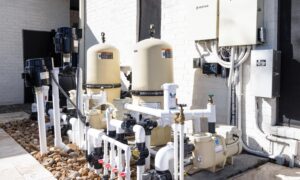
Why Pool Pump Runtime Matters
Your pool pump is responsible for moving water through the filtration system. It helps circulate chemicals, remove debris, prevent stagnant water, and keep your pool from turning cloudy or green.
When your pump schedule is too short, chlorine and other chemicals may not move evenly throughout the pool. That can create dead spots where algae and bacteria are more likely to grow.
In Florida, this matters even more because warm water and heavy rain can throw off your pool chemistry quickly.
How Long Should a Pool Pump Run in Florida Summer?
During Florida’s hotter months, most pools should run closer to 10 to 12 hours per day.
This is especially true if your pool:
- Gets direct sunlight most of the day
- Has heavy swimmer use
- Is surrounded by trees or landscaping
- Gets cloudy after rain
- Has a history of algae
- Uses older pool equipment
- Has a single-speed pump
In the cooler months, some pools can run for fewer hours. But in spring and summer, cutting pump time too low can cause water problems quickly.
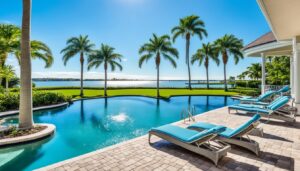 Should You Run Your Pool Pump During the Day or Night?
For many Florida pools, running the pump during part of the day makes sense because that is when heat, sunlight, and pool usage are highest.
However, the best schedule depends on your equipment.
If you have a variable-speed pool pump, you may be able to run it longer at a lower speed. This can help improve circulation while using less energy than running a single-speed pump at full power for a shorter period.
If you have a basic timer or older pump, your schedule may need to be adjusted seasonally to keep the water clear.
What Happens If You Do Not Run Your Pool Pump Long Enough?
Poor circulation can lead to several common pool problems, including:
- Cloudy water
- Green water or algae growth
- Debris settling in corners
- Uneven chemical distribution
- Strong chlorine smell
- Dirty tile lines
- Filter pressure issues
- Extra strain on pool equipment
A lot of homeowners think every cloudy or green pool problem is a chemical issue. Sometimes it is. But many times, the real problem is circulation.
If the water is not moving properly, chemicals cannot do their job.
Rain Can Change Your Pool Pump Schedule
In Southwest Florida, rain is a major factor.
Heavy rain can dilute your pool chemicals, add debris, lower chlorine levels, and change the water balance. After storms or heavy rainfall, your pool may need extra circulation, cleaning, and water testing.
This is one reason weekly service is so important. Your pool should not be treated the exact same way every week of the year. The pump schedule, chemical levels, and equipment condition should all be monitored based on the season and current pool conditions.
Signs Your Pool Pump Schedule Is Not Working
Your pump may not be running long enough if you notice:
- The pool gets cloudy between service visits
- Algae keeps coming back
- Dirt or debris collects in the same spots
- The water does not look polished
- The pool smells heavily of chlorine
- The skimmer does not seem to pull well
- The filter pressure changes quickly
- The pool looks worse after rain
If these problems keep happening, simply adding more chemicals may not fix the issue. Your pool may need better circulation, filter cleaning, equipment repair, or a new pump schedule.
When Pump Runtime Is Not the Real Problem
Sometimes the pump is running long enough, but the system still is not working properly.
Common causes include:
- Dirty or clogged filter
- Clogged pump basket
- Weak pump motor
- Bad pool timer
- Poor return jet direction
- Undersized pool pump
- Automation settings that are not programmed correctly
- Salt system not producing enough chlorine
- Plumbing or suction issues
This is why equipment monitoring matters. A pool can look clean on the surface while a bigger issue is developing in the system.
Pool Executives’ Recommendation
For most Southwest Florida homeowners, your pool pump should run long enough to fully circulate and filter your water each day, especially during the warmer months.
But there is no perfect one-size-fits-all schedule.
A pool in Sanibel, Captiva, Fort Myers Beach, Estero, Bonita Springs, Cape Coral, or Fort Myers may need a different schedule depending on sunlight, rain exposure, pool size, landscaping, equipment type, and usage.
At Pool Executives, our weekly pool service is designed to do more than just clean the surface. We monitor water chemistry, check equipment, look for early warning signs, and help keep your pool Swim Ready™.
Need Help With Your Pool Pump Schedule?
If your pool keeps turning cloudy, green, or difficult to maintain, your pump schedule may be part of the problem.
Pool Executives provides weekly pool cleaning, equipment monitoring, pool pump repair, and full pool maintenance services throughout Southwest Florida.
Contact Pool Executives today to schedule service and keep your pool Swim Ready™.